
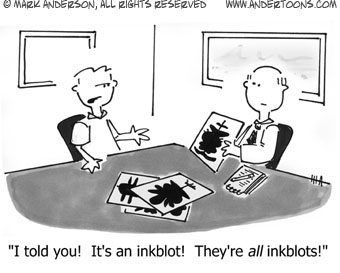
In a recent Capital Factory all-hands discussion, one of the founders started a question with a well-worn preamble:
“I talked to a bunch of the mentors and they all told me the same thing about pricing, but I’m telling you, they’re wrong. I know our industry, I know how our customers think, and in our industry …”
What followed was well-reasoned and sensible. Since none of the mentors have specific expertise in the industry in question, it was impossible to argue.
So rather than argue, I just asked:
“OK, so when you talked to the last dozen potential customers and proposed the pricing scheme you just described, you’re telling me they all said, ‘Heck yes’?”
“Well, I didn’t actually ask them, no.”
“Why not?”
“Because I know what they’re going to say.”
“Great! So, next week you’re going to a convention where you’ll talk to dozens of new potential customers. Do me a favor — humor me! — and include your pricing scheme in the pitch. I’m sure you’re right and they’ll be thrilled, but since you’re so sure it certainly won’t hurt to include it. In fact, it will strengthen your pitch because it will match their expectations and therefore mitigate any worry that you don’t ‘get it.’”
“OK, I will!”
I could already see the self-satisfaction on her face. She knew she’d have a great “I told you so” moment next week, and in fact I was equally sure she’d have that moment! She is the expert, I’m not. Case closed.
Of course (you know what’s coming), it turns out she was wrong. And whenever an assumption is kicked out from under you, that’s when you learn the most.
The following week she sent me this email (my emphasis):
Ever since accidentally stumbling upon lean startup 1+ years ago, I’ve struggled to implement the principles correctly. Somehow my version of “lean” customer discovery involved hour long phone calls, relationship-building networking meetings, vague answers to improperly formulated questions…
In the past week of quick phone calls to vendors, I’ve learned more about this market than I did in the past year. I also got a good feel for when I no longer needed to do further discovery.
We’re all plagued by this defect of human nature — thinking we know more than we do — which then causes us to miss opportunities to actually learn something. I still struggle — in every customer call I have to consciously restrain myself from pitching and instead ask questions, and really try to understand what they mean instead of mapping their words onto what I want them to say.
The worst is when you’re an “expert” because then you’re even less likely to challenge your assumptions.
As an “expert” you’ve devised your own laws about what makes your market different from other markets, and what makes your company unique. Even with prior experience, this knowledge based largely on feeling, not fact.
When I say this to “experts,” their first reaction is (of course) defensive. “But I have 15 years of experience selling into the financial services sector; I know what makes them tick.” Shoot, I used this excuse myself recently: “I built a company and forged dozens of customer relationships in the software development tools sector; I know exactly how to sell into that market.”
This is wrong for a number of reasons.
First, markets change rapidly. You can’t rely on five-year-old information about your potential customers — even the stodgy big-company ones but especially the mass-market consumer ones.
Non-technical people now employ technology (iPhones, Facebook). Industries built around control of information are now out of control (real estate, publishing). Methods of reaching consumers change every year (compare SEO or AdWords strategies from 2003 and 2010). Expectations of what software should do, or what it should integrate with, or whether it’s OK for data to live on your laptop or someone else’s server, or whether it needs to be accessible from a cellphone — it’s all changing, all the time.
Ironically your 10-15 years of experience “in the field” might be clouding your judgement. Some of that experience is invaluable — so much so that it’s an unfair advantage. But your outmoded ideas prevent you from addressing the market as it is today, allowing a competitor to beat you with innovative advances they achieve exactly because they’re not shackled by old ideas.
Another way your experience can hamper you is that selling different products into the same industry is different.
For example, I talked to an entrepreneur with years of experience selling a standard medical device to doctors. He has an idea for a new software package for managing an expensive, time-consuming aspect of practice-management. Of course his rolodex gives him an lovely advantage — he can bounce ideas off potential customers and line up ten alpha testers before writing a line of code.
But he hadn’t done that. He told me that he’s been selling to doctors for years. I asked whether it was OK to install new software on their computer; he didn’t know because he was selling hardware before. I asked whether it was OK to depend on an Internet connection inside a secured hospital; he said “probably” but he’d never asked. I wondered what they would pay for this software; he said they paid a lot for this medical device so it should be easy to get lots of money for this software. I doubted that the budget for front-office software has any relation to that for devices; he hadn’t thought of that. I asked how many people had agreed they actually wanted this particular software, even for free, and he said zero, so far. But that didn’t worry him.
Your knowledge of one slice of a market doesn’t automatically set you up for other slices. You’re not starting from scratch, but you have to have an attitude of re-learning.
Of course if you can fuse your special knowledge with an open mind, that could very well be an unbeatable combination.
But you have to set your ego aside and actively force yourself to explore anew with a “child-like” mind. Use that rolodex to set up meetings and sales calls, but don’t assume you know what they’re going to say. Use that experience to come up with plausible theories, not to make decisions.
It won’t happen unless you force yourself to do it.
Keep it going in the comments: What aspects of being an “expert” gives you an advantage and which hold you back? Do you have stories of root assumptions turning out wrong?
23 responses to “When being an “expert” is harmful”
I agree with everything written here. Expertise can be very useful for technical matters such as product development, but market demands and definitions are constantly changing and are shaped by emergent technology and innovations.
Assumptions about people need to be constantly tested and confirmed, since people are unpredictable. A real “expert” would know that he needs to constantly optimize his pricing, improve his product, work 24-7 to generate demand, and that work is never over. So in fact, an “expert” in my eyes is someone who is looking to improve and learn rather than settling for past experience. An expert entrepreneur, that is.
Does an expert mean one needs to have 10,000 hours of experience in a given field as Gladwell suggests? Actively listening with ongoing conversations is key, market reports only tell half of the story in my opinion.
Listening is critical. I learned that rule 40 years ago in sales.
There’s one partial exception however. If you truly are innovating rather than introducing a variation on flavor of the month, the prospect has no yardstick by which to measure your offering.
Any time people think asking prospective customers is always the answer, consider Steve Jobs. Or Thomas Edison, Or Henry Ford. Sometimes -and I agree it is truly rare- an entrepreneur is wise to understand s/he must slowly build a market where they are the only one with enough vision to see the future.
Being an expert of your own limitations is important. An ability to spot the expertize of the others and to utilize them to supplement your own lack of those is a skill I’m working on. Cutting through BS in the process is a time-consuming activity…
I believe are two kinds of expertise – the 10,000 hour kind needed for honing elite skills, and the 3 week kind where you can outperform 90% of other “experts” by immersing yourself in a subject for 3 solid weeks of research, and asking “why”.
Doing the 3-week variety can be highly beneficial, but it only makes you a short term expert. Perfect for understanding customers initially. Terrible for extrapolating from that understanding over a year-long project.
And the 10,000 hour variety suffers from the “curse of knowledge” where since you already know “everything”, you tend to be blind to fairly obvious beginner issues and problems. Sort of like a software engineer trying to explain programming to a non-techie. “You just need to put a loop here to traverse your data structure sequentially, and add a conditional to check if it’s null. Got it?”So for both, practicing “beginner mind”, and continuing to talk to real people is the key. It’s really, really hard to not “lead the witness”, but it’s critical to understanding customer problems, fears, and worldview.
I agree the expert knowledge can get in the way of listening. But it has pros (and some cons) when it comes to generating solution ideas that are elegant/focused/executable.
Jason…ppl/customers don’t behave rationally…Your assumption is that they do! That medical salesman would still sell his product based on his selling skills and network of doctors. Whether it is a quality product that really adds value is debatable. Heck, he could probably even sell IE6 to those customers…just because he can!
Jason,
I agree 100%. Basically, what you’re reminding people on how to survive their past successes. I see a lot of people in our industry who are “veterans” struggling to figure out why our two companies are succeeding and they are failing..
When I was working as a consultant, in the traditional sense of the word, my mentor once said to me “the best thing you can do is ask ‘why’, even if you think you already know the answer”.
Noticed a typo: “doing to say” should be “going to say”
Dunning-Kruger effect?
I would say so, but I”m no expert. ;)
maybe the epistemologists we’ve been talking about, the acknowledged experts in the Chomsky-Kant linguistic structures, can’t see how the Critique could be interpreted as a design manual for self-aware intelligent buildings? here’s hoping …..
There is always an assumption between facts and conclusions. The assumption is generally between the way you think things should be (values) or the way you think things really are (descriptive). I try to know what my assumptions are before I get to certain of my conclusion and recommendation. This built in pause is part of my view of critical thinking and very helpful to professional judgement.
Great article. As a creative, and having spent 15 years constructing static and animated visual communication to maximise impact and minimise the brain power needed to absorb a message, I find that humans essentially are no different, but what they want to see and the channels they have access to is different – they are more hungry and less patient. Succinct, concise communication is key- gone are the ‘wow’ flash intros of yesterdecade and here’s the gimme gimme gimme era! Words are weaker than they used to be.
I have worked with teams of the most left-brain people, stretching their creativity – and listening to them has helped me extract valuable information necessary to produce great creative results. I read once that an expert is someone who can tell you why NOT to do something, which to me implies that you don’t know all the answers, but you do know when an idea isn’t necessarily the best…when you should dig deeper. I think from a creative angle, you must take time to listen, with an eclectic mind and active foresight, to everybody who wants to be involved. Deconstruct the lot when you’re alone and see what cake you can bake- let it all talk to you…and listen to it. I personally find that by accepting where you’re going is ‘the unknown’, you have a greater chance of unravelling something nobody has ever seen or experienced. This will stand out, and you’ll learn from it too. Thinking you know the answers can often be restrictive, which brings me full circle to agreeing wholeheartedly with the subject of your post.
After ten thousand victories, still a beginner.
a kanji? calligraphy from my martial art. Thank You Mister Hayes
An expert isn’t someone who has all of the answers, but someone who is knowledgeable, and curious enough to ask the questions which lead to the answers which solve problems, fulfill needs, and cater to desires…
~Gian Fiero, Growth Expert
Very very true – I’m reminded of a quote I read many years ago: “If you haven’t discarded a major belief or picked up a new one in the last 10 years – check your pulse. You may be dead.”
– Mike
Voltaire was right. The secret of being boring *is* to say everything. Except in this case, the secret is to *know* everything. Experts, like most boors, are tiresome at best and dangerous at worst. Give me someone with the humility to know their limitations and the drive to delight a user ANY DAY. And I’ll give that person some of my time.
I dislike the word expert, to me it implies that an individual has reached the limit, that there was a total amount of knowledge to gain in something and that he/she reached that total, its crazy that someone would see themselves as an expert or a guru, its arrogant even.
Like closing the doors of your mind and suggesting that nothing more will enter, only information will exit, and that exiting information for others must be correct because it came from you, the “expert” the all knowing one.
To me, nobody is an expert, they are possibly more knowledgeable yes, have spent more time on or in something.